
The Centre has reviewed the monsoon situation, noting a reduced rainfall deficit and ongoing preparedness for the kharif season amidst El Nino concerns. A high-level meeting chaired by the Principal Secretary to the Prime Minister discussed measures across various sectors, emphasising continuous monitoring and coordinated action to mitigate potential impacts on agriculture, water resources, and essential commodities.

With the southwest monsoon stalled over southern Maharashtra, India is facing a nationwide rainfall deficit of 41 percent between June 4 and June 18, according to the latest India meteorological department (IMD) data.

The southwest monsoon has withdrawn from India, while the northeast monsoon has commenced in southern regions, bringing a wet spell. This year's southwest monsoon saw a rainfall deficit, largely attributed to the strengthening El Nino conditions, which are expected to persist until February 2027 and could become the strongest since 1950.

The Maharashtra government has declared 265 out of 358 talukas as drought-affected, covering 74% of the state, due to significant rainfall deficit. This declaration activates 'Trigger-1' of the state's drought management framework, leading to the announcement of various relief measures for farmers and residents, including loan restructuring, revenue concessions, and provisions for water and fodder.

The India Meteorological Department (IMD) has predicted below-normal rainfall for India during the second half of the southwest monsoon season, specifically from August to September. This forecast indicates less than 94 per cent of the Long Period Average (LPA) for the period. While July saw good rainfall activity due to low-pressure systems and the Madden-Julian Oscillation, the Southern Peninsula experienced significantly low rainfall and record high minimum temperatures.

The monthly average rainfall over India is expected to be below normal during July, the India Meteorological Department said on Tuesday in its monthly forecast.
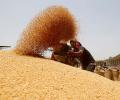
Despite the looming threat of El Nio and drought conditions in several states, the Indian government has set an ambitious foodgrain production target of 373.93 million tonnes (mt) for the 2026-27 crop year, slightly lower than the previous year's actual output but higher than its target.

Rainfall during the monsoon season so far, from June 1 to September 13, has been 15 per cent below normal.

Torrential rains have caused widespread devastation across several Indian states, leading to at least 11 deaths in Assam and Uttarakhand, pushing rivers above danger levels, and disrupting daily life with landslides, floods, and school closures. States like Jharkhand, Uttar Pradesh, Himachal Pradesh, Delhi, West Bengal, and Jammu & Kashmir are also grappling with the monsoon fury, while Meghalaya faces an unusual rainfall deficit.

After a subdued start, the southwest monsoon has gathered pace since the beginning of July, narrowing the cumulative rainfall deficit from nearly 30 per cent on June 30 to around 15 per cent as of July 8.

Maharashtra is grappling with an escalating drought crisis, with 305 talukas now declared drought-hit, prompting the state government to announce Rs 5,000 in financial aid for farmers before Diwali and extend comprehensive relief measures.

The Maharashtra government has cancelled leaves for employees across 11 departments involved in drought management to assess widespread crop damage, particularly affecting soybean. This follows the declaration of drought in 265 talukas and the announcement of relief measures. Revenue Minister Chandrashekhar Bawankule is on an assessment tour, facing protests from Congress workers demanding immediate farmer relief.

This was the fourth-lowest rainfall since 2001 and the 13th lowest since 1901, under the impact of El Niño.

'Without that one critical irrigation, the entire crop can be lost.'

Climate experts explain how El Nino and climate change are intricately linked, with El Nino delaying monsoon onset and climate change intensifying rainfall. This new reality is altering the Indian monsoon's behaviour, leading to short-duration, high-intensity rain spells, especially in western and northwestern regions.

India's economy is projected to lose momentum in the second half of fiscal 2026-27, with tighter financial conditions, elevated energy prices, and broadening inflation pressures posing significant risks, according to DBS Bank economist Radhika Rao.

Water levels were even lower than the 10-year average in 27 reservoirs in eastern India and around 47 in southern India.

The southwest monsoon has advanced across northern Indian states, leading to widespread rainfall, waterlogging, road blockages, and rain-related deaths, particularly in Himachal Pradesh and Rajasthan. The Centre is monitoring the situation, especially concerning potential drought conditions in some areas due to the El Nino effect.

India's wholesale price inflation (WPI) increased to 9.87 per cent in June, up from 9.68 per cent in May, primarily due to significant price increases in non-food and food products, with food inflation alone rising to 5.49 per cent.

'I don't really expect the August increase in food prices, which was close to 6 per cent, to persist as we go close to the end of this year.'

The IMD is predicting close to a 60% probability of deficient rainfall, which means there is a strong possibility that the monsoon this year will be poor.


'With factories starting early for the next season, fresh sugar will enter market 10-15 days earlier than usual, and sugar price are expected to remain affordable in near term.'

Andhra Pradesh Chief Minister N Chandrababu Naidu has set an ambitious target for district collectors to achieve a 15-20 per cent growth rate, building on the state's 13.4 per cent growth in Q1 FY27, the highest in India.

June rainfall accounts for 15 percent of the total precipitation of 87 cm recorded during the four-month monsoon season in the country.

Karnataka Chief Minister DK Shivakumar on Sunday asserted that his government was committed to protecting the interests of the state's farmers and people on the Cauvery issue, while appealing to organisations to withdraw the proposed state-wide bandh.

Tamil Nadu Chief Minister C Joseph Vijay opened the sluices of the Stanley Reservoir in Mettur on Tuesday for irrigation in the Cauvery delta districts.
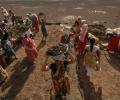
The Indian government has identified 111 districts as 'most vulnerable' to crop damage due to a 43 per cent monsoon deficit, driven by El Nino, which threatens kharif sowing. Agriculture Minister Shivraj Singh Chouhan stated that weak monsoon conditions are expected to persist until July 2, prompting contingency plans and recommendations for alternative, less water-intensive crops.

Members of the Reserve Bank of India's (RBI) Monetary Policy Committee (MPC) have indicated that interest rate hikes may be necessary sooner rather than later, as headline inflation is projected to rise from its current benign levels in the coming months, according to the minutes of the August review.

Mumbai has spent four centuries building folklore around its monsoon: The potholes, the delayed trains, the office debates about whether it will 'break' this week or next. It turns out the rain was always a market. Nobody had built the exchange for it until now!

'The ethanol blended with petrol programme should not be halted or reconsidered.' 'India is not experiencing a structural sugar shortage, and the ethanol blending roadmap does not compete with food security or drive domestic price increases.'
The North East India, where the economy is primarily based on agricultural activities, is reeling under deficit rainfall condition so far this year that is posing serious hazards to cultivation of paddy, the principal crop in the region.

India's automobile retail sales surged by 21.83 per cent year-on-year in June, reaching 25,57,234 units, marking the best June ever recorded across all segments, according to the Federation of Automobile Dealers Associations (FADA).

'The real shock is going to be from a deficient monsoon.'

'Monsoon is the pran (life) of our water system.' 'A weak monsoon will have a very negative impact on crops and people's lives.'

'Healthy double-digit returns are still possible, though a sharp rally is unlikely.'

India's finance ministry anticipates inflation will remain relatively contained in the coming months, supported by a correction in crude oil prices and softening input costs following the cessation of the West Asia conflict, despite earlier spikes in wholesale and retail inflation.

The IMD said that rainfall over India in August and September would be around 106 percent of the long-period average of 422.8 mm.

Drought fears will subside if the momentum generated is maintained in August.

Heavy rain in the first week of July compensated for the shortfall but caused flooding in many northeastern states.
